
Searching Gila County Criminal Dockets
Start with the Arizona Judicial Branch Public Access case search. It is a free lookup covering case information and case history for most participating courts. Complete the verification image first. Then search by defendant name or by the full case number. Keep an alphabetic prefix such as CR attached. Apply the court filter when you know which court handled the matter. Gila County has Superior Court, two regional justice courts, and several municipal courts. Without a filter, a common name can pull the wrong file. Treat any result as a lead rather than an official record. Write down the full court name, case number, filing date, case status, and newest event. For an eligible public Superior Court criminal document filed since July 1, 2010, check eAccess. When the record is older, excluded, or missing, call the clerk. Ask for the court shown in the result. Follow these steps for the Gila County criminal docket search:
- Identify whether the matter began in Superior, regional justice, or municipal court.
- Search Public Access by full case number or name and choose the Gila court.
- Open the case detail and compare count status, case status, and the newest event.
- Use eAccess for an eligible image, or contact the correct clerk for the document.
- Order a clerk-certified judgment when an authenticated result is required.
Gila Felonies Have Two Dockets
A felony often begins with an initial appearance in Globe or Payson Regional Justice Court. Release terms, counsel, and preliminary proceedings can all appear under that lower-court number. Prosecution then continues by indictment or information. Gila County Superior Court assigns a different number. From there the Superior Court criminal case history carries arraignment, pretrial litigation, plea or trial, judgment, and sentencing. Check both levels. Searching only one can hide a vital part of the sequence. Keep both case numbers on hand. Transfers and later filings create new entries rather than erasing the first court record. Gila County Superior Court hears the felonies. The regional justice courts keep the preliminary docket. A municipal or county-filed misdemeanor normally stays with the limited-jurisdiction court. That split reflects court authority and custody, not a duplicate error.
Quick answer: A justice-court beginning and a Superior Court felony can concern the same proceeding while retaining separate Gila County criminal docket numbers.
Inside a Gila County Criminal Docket
A Gila County criminal case detail opens with identity fields. From there it moves through parties and charges. Chronological events, settings, disposition, and public financial data follow where available. The State appears as prosecutor and the accused as defendant. A judicial officer may be listed too. Document images do not always come with the free event history. An event label may show that an order exists. Its full text may stay out of view.
| Case number | The court's exact identifier, often with a criminal CR prefix. |
|---|---|
| Charge and count | Description, offense date, and separate status for each alleged count where public. |
| Case history | Dated complaints, indictments, motions, minute entries, orders, pleas, and hearings. |
| Setting | Hearing date, time, court, and event type when populated. |
| Disposition | Dismissal, plea, verdict, sentence, judgment, or later appeal activity. |
Read charge-level and case-level fields separately. One count can be dismissed while another ends in a plea. A bond entry concerns release, not guilt. A scheduled sentencing is not yet the sentence. For the operative result, use the signed judgment or minute entry.
Gila Criminal Docket Rule Sources
Arizona statutes draw different boundaries for sealing, expungement, treatment files, and release restrictions. Each process has its own scope, so the official pages matter. The criminal case-record sealing statute sets out the sealing rules on the legislature's own page.
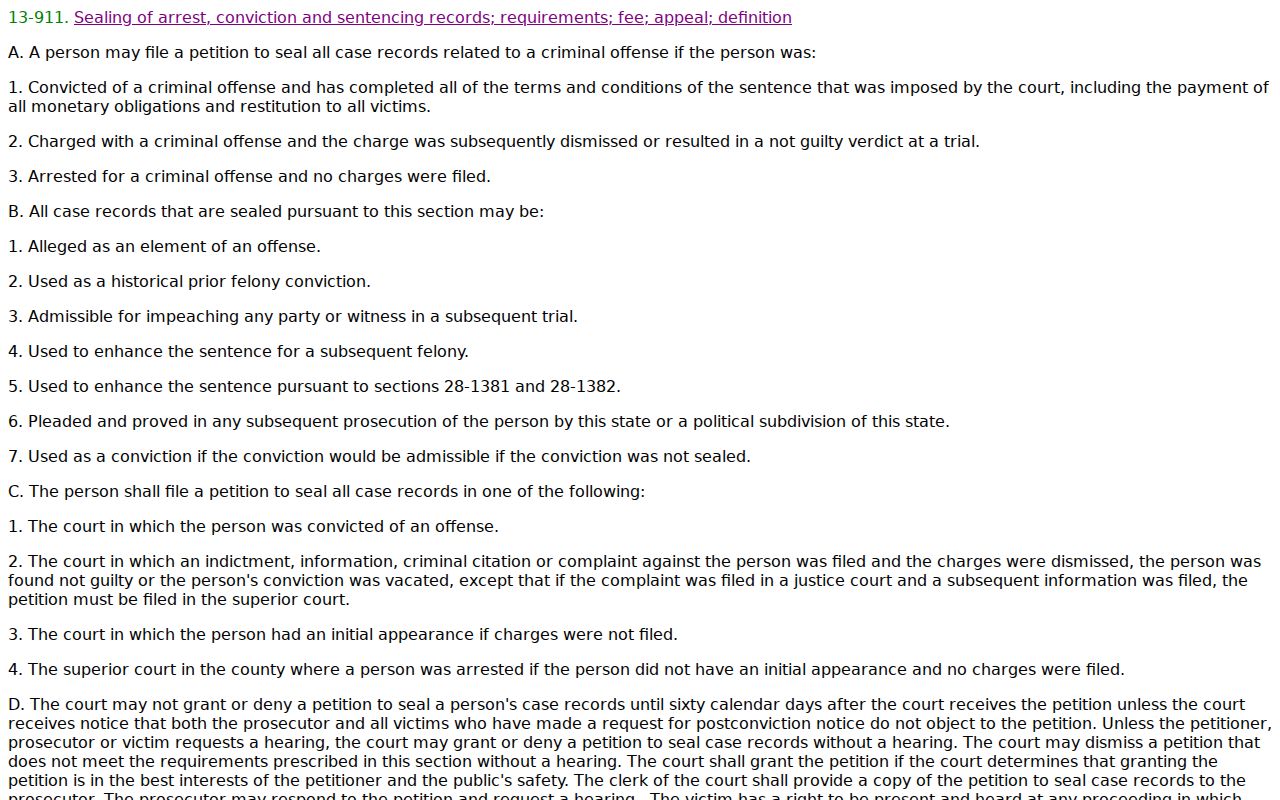
That statute supports a key distinction: a record does not seal itself just because a charge ended or was dismissed. Eligibility, notice, waiting periods, and a court ruling can all matter. A separate Arizona marijuana expungement statute governs qualifying marijuana records.
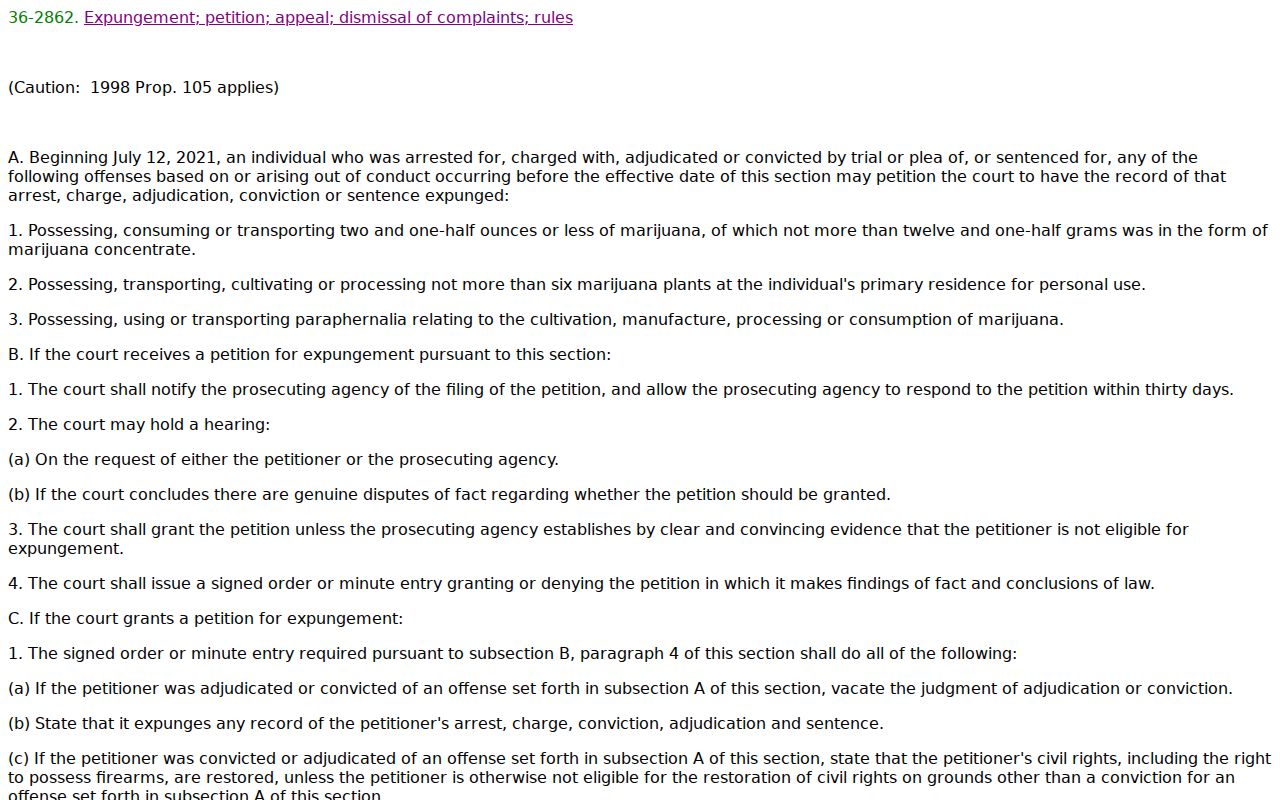
Separate authorities keep the two procedures distinct. One is sealing. The other is expungement. A public searcher should never infer eligibility or a case result from a blank portal page, since each remedy stands on its own rules.
sentences
short
sentences
short
image_after
image_after
How a Criminal Case Moves
A criminal docket reads like a timeline. More than one court may appear on it. A case often opens with an arrest or complaint. An initial appearance follows, where release gets decided. From there, a felony charge reaches Superior Court through an indictment or information. The later entries can pile up fast. Arraignment comes first, then disclosure filings, motions, and pretrial conferences, followed by a plea or trial, sentencing, any post-conviction motions, and an appeal. Misdemeanors take a simpler path and usually stay in justice or municipal court, depending on where the case was filed.
Gila criminal docket flow: Filing › Arraignment › Pretrial › Plea or Trial › Disposition › Sentencing
The case history runs in order. Several court levels can still be involved. An arrest or complaint may lead to an initial appearance and a release decision. A felony then moves to Superior Court after indictment or information. The later history can record arraignment and disclosure-related filings. Motions and pretrial conferences may follow. Then come a plea or trial, disposition, sentencing, post-conviction motions, and appeal. Misdemeanors generally stay in justice or municipal court according to the filing jurisdiction.
- Arraignment
- The court states the charge and receives a plea.
- Disposition
- The outcome of a count or case.
- Minute entry
- The court's written record of a proceeding or ruling.
- Continuance
- A setting moved to a later date while the old entry remains in history.
Gila Criminal Images and Treatment Files
Remote access reaches less than what a court may hold. Involuntary-treatment proceedings get specific confidentiality protection under A.R.S. §36-509.01, which the legislature's page spells out.
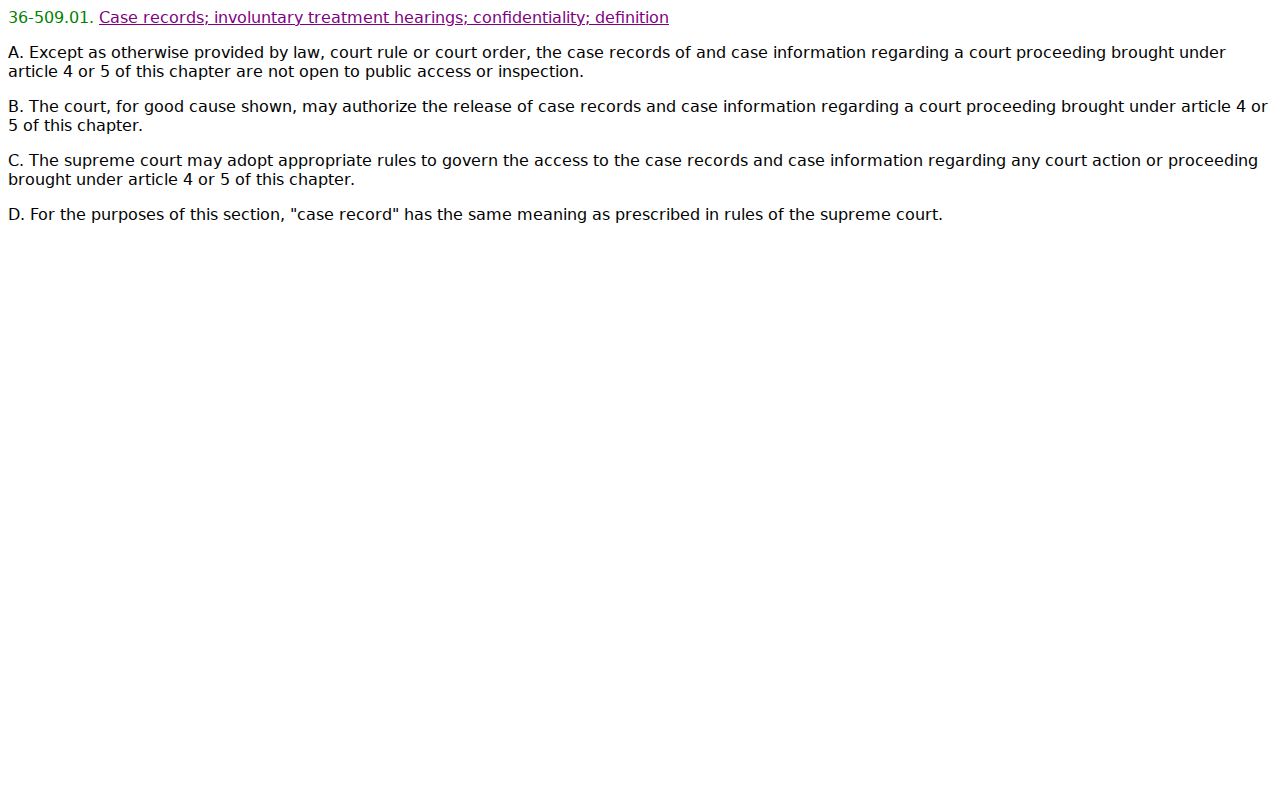
That statute explains why a missing mental-health matter belongs with the court custodian rather than unofficial sources. Identity and authority may need to be shown first. Arizona also permits court-ordered limits on dissemination in defined circumstances. The official restriction-on-release provision states those limits.
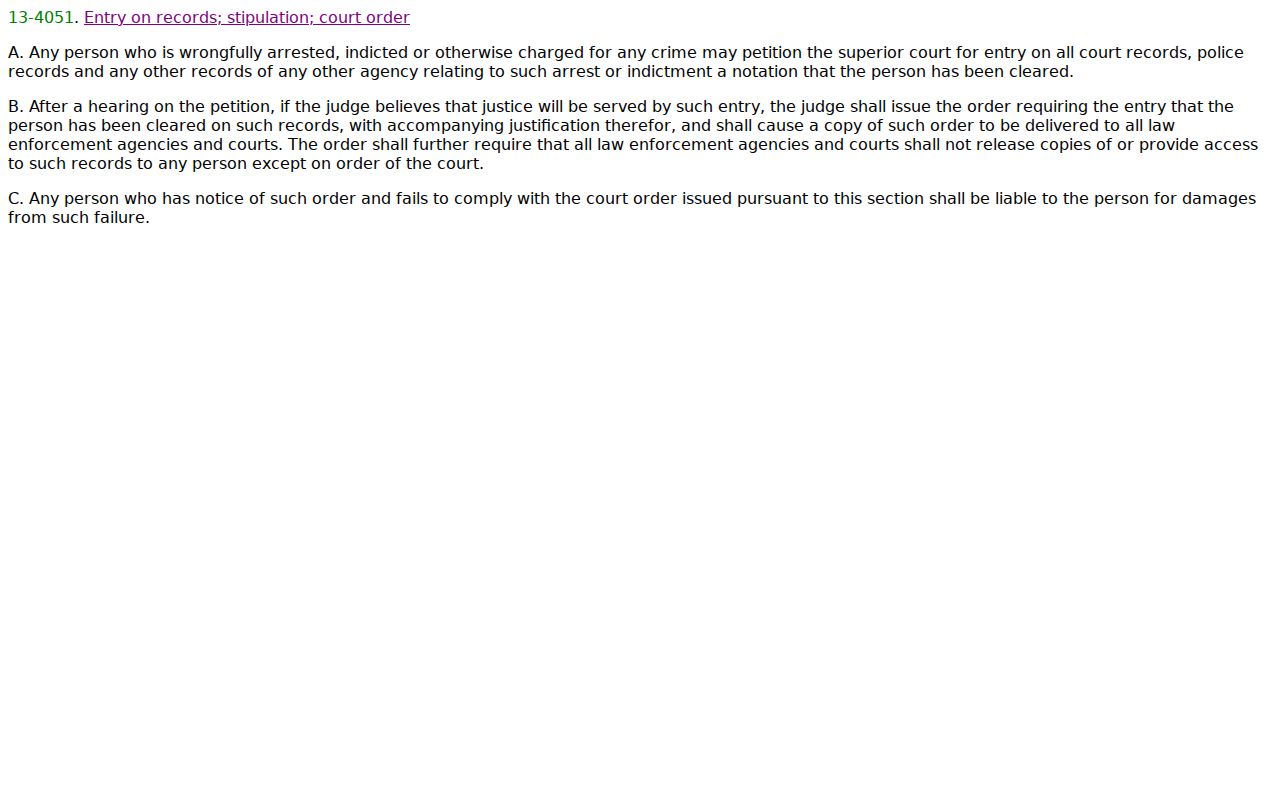
Together these sources point to a practical rule: a blank online result is never automatically clear. It can reflect a restriction, a categorical exclusion, a delayed update, or a case outside portal coverage.
Courts That Hold Criminal Dockets
Criminal court records in Gila County sit in more than one office. The Clerk of the Superior Court holds the felony files and other Superior Court records. Misdemeanors are different. County-level misdemeanor cases, preliminary felony proceedings, and criminal traffic matters belong to the Globe and Payson Regional Justice Courts. Municipal courts are separate. Each one keeps its own city misdemeanor, ordinance, and traffic caseloads. Administration may be shared across them.
| Court | Criminal docket | Contact route |
|---|---|---|
| Gila County Superior Court | Felonies and later Superior proceedings | Globe clerk 928-402-8866; Payson branch 928-474-3978 |
| Globe Regional Justice Court | Southern county misdemeanors and felony preliminaries | 928-425-3231 |
| Payson Regional Justice Court | Northern county misdemeanors and felony preliminaries | 928-474-5267 |
| Municipal courts | City misdemeanor and ordinance matters | Use the court named on the case or citation |
Gila County runs its court planning along a real geographic split. The Roosevelt Lake Bridge separates north from south. Because of that line, hearings sit on both sides. A Gila County criminal case may be heard in Globe or in Payson. Check the hearing location before you drive to either courthouse.
Gila Criminal Microfilm Fallback
Digital coverage only goes so far in Gila County criminal docket history. A 2015 county record described fiche alongside 16mm and 35mm equipment. It also noted that old criminal microfilm had not all been digitized. So a file missing from any online docket search may still exist on film. That matters for anyone tracing an older criminal docket. Ask the Gila County Clerk of the Superior Court. Is the file on archival media? Will you need a lobby terminal or staff retrieval?
Give the clerk precise details. Include a narrow year range and the court. A full case number helps if you have one. Party or caption information and the exact document sought narrow the search further. Before sending money, ask about current search, copy, certification, payment, and delivery terms. No current Gila copy or archival fee can be stated here. Confirm the amounts directly. Start with the official clerk page, which lists current contact and fee information.
Note: A pre-2010 criminal filing may remain on paper or film. It may fall outside eAccess document-image coverage.
Sealed Dockets and Public Access
Arizona Supreme Court Rule 123 governs public access to judicial records. Access is the presumption. Limits are allowed for privacy, confidentiality, court operations, and protected categories. Statewide Public Access leaves out sealed cases and orders of protection. Victim and witness information is left out too. So are mental-health matters, probate, juvenile delinquency, and local-ordinance information. Some public material still sits with the court. It may require a trip to the counter or a focused records request.
Key access rules:
A.R.S. §13-911 establishes a petition-based criminal sealing process with statutory limits.
A.R.S. §36-2862 separately governs qualifying marijuana expungement.
A.R.S. §36-509.01 closes specified involuntary-treatment proceedings unless an exception applies.
The official Arizona court rules portal provides the current rules source.
This rules source anchors the fallback process when a docket is sealed. A request should name the custodian, court, case number, document, date, and desired copy type. If access is denied, ask for the reason and the current Rule 123 review route.
Newest Gila Criminal Setting
Public Access updates weekly, on Friday, with information through Wednesday. That delay can matter when a Gila County criminal hearing is near. After a reset, old settings stay in the event history. Read the docket from the newest entry backward. Look for "vacated," "continued," "reset," a signed order, or a minute entry. A filed motion to continue is only a request. It does not prove a new date was granted.
If an imminent setting or warrant entry looks stale, call the assigned court. Superior Court cases go through the Globe or Payson branch number. For a retained misdemeanor, use the regional justice or municipal clerk. Confirm the date. Confirm Arizona time, the courtroom or remote platform, and the required form of appearance. A livestream link lets you watch. It does not by itself permit remote appearance. The Gila County Court Dates page covers other calendar confirmation channels.